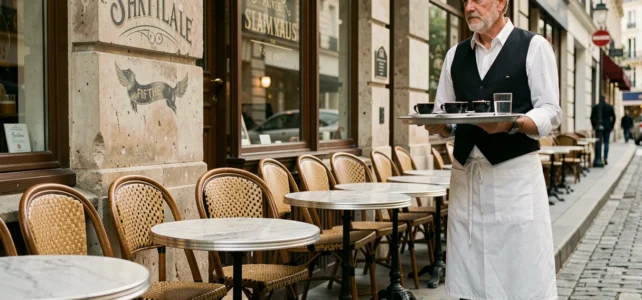
In France, the word “café” refers both to a drink and the place where it is consumed. The word “bar” refers to the counter and, by extension, to the entire establishment. These two terms coexist in everyday language, on signs, and in regulatory texts, without the boundary always being clear.
French law does not oppose them outright: it classifies drinking establishments according to the type of license held, not according to the name displayed on the facade.
Drinking establishment license: the true legal distinction criterion
French regulations do not legally define what a “bar” or a “café” is. It distinguishes establishments by their category of drinking establishment license. An establishment that only serves non-alcoholic beverages (fruit juices, coffee, tea, sodas) operates under a first category license, often called a “non-alcoholic beverage license.” As soon as it offers alcohol, it falls under a different regime.
License III allows the sale of fermented non-distilled beverages: wine, beer, cider, mead. License IV, known as the “great license” or “full exercise license,” permits the serving of all types of alcohol, including spirits. A café that holds a license IV can therefore serve whisky or rum, just like a night bar.
Understanding the definition and differences between bar and café first requires looking at this license, not the sign. An establishment named “Café de la Place” with a license IV is legally identical to a “Bar des Sports” with the same license.
Café or bar: what usage and atmosphere really change
If the law does not decide, it is usage that creates the distinction perceived by customers. The café, in the French imagination, remains a place of daytime sociability. One has an espresso in the morning, reads the newspaper, meets colleagues during breaks. The café functions as a third place between home and work.
The bar is more aligned with an evening or nighttime atmosphere. The drink menu highlights alcohol, cocktails, and sometimes draft beer. The lighting, furniture, and music steer the experience towards relaxation or celebration.
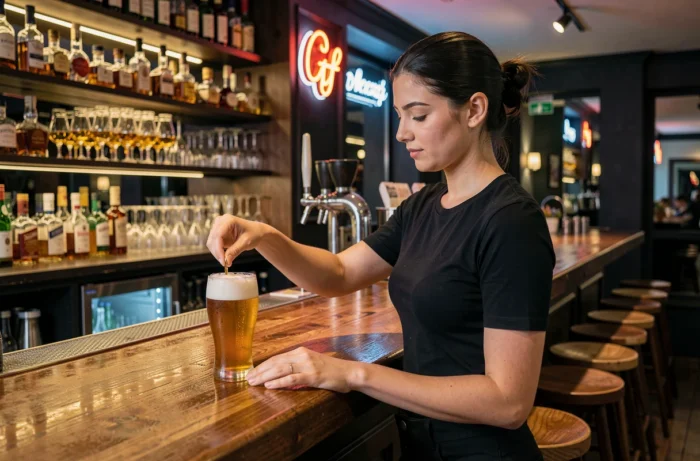
This separation is not rigid. Many establishments play on both registers: café in the morning, bar in the evening. The concept of “café-bar” reflects this hybridization. In rural areas, the village café-bar often remains the last local shop open all day, serving both the morning coffee and the evening aperitif.
The case of the bistro and brasserie
The bistro is similar to the café in its neighborhood atmosphere, but it generally offers light meals (croque-monsieur, daily specials). The brasserie, on the other hand, is more aligned with proper dining, featuring a more extensive menu and structured table service. Neither the bistro nor the brasserie corresponds to distinct legal categories.
Common regulatory obligations for bars and cafés in France
Regardless of the chosen name, legal obligations depend on the license and type of activity. Several rules apply to all drinking establishments for on-site consumption.
- Price display is mandatory inside and outside the establishment, with prices including VAT, the volume served, and a list of common beverages.
- For amounts over 25 euros, the professional must provide a receipt to the customer. Below that, the customer can still request one.
- The establishment must offer free drinking water to anyone who requests it, even if they have not ordered anything else.
- For any sale of alcohol, an operating permit is required. This is obtained after specific training on alcoholism prevention and current legislation.
Food hygiene training is also part of the applicable framework, especially when the establishment offers light meals. Recently, the authorization regime for training organizations in this area has been strengthened, with oversight exercised at the prefectural level.
Terraces and local regulations
Terraces are a separate issue. Their installation on public land requires municipal authorization (road permission or parking permit). The rules vary significantly from one municipality to another, and the debate over a total smoking ban on terraces regularly resurfaces in French legislative news, without a uniform national measure having been adopted at this stage.
Opening a bar or café in rural areas: a specific challenge
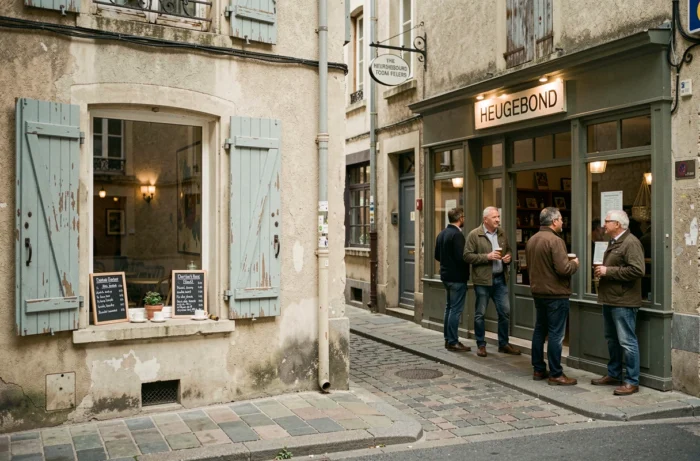
The question of the bar/café distinction takes on a particular dimension in small municipalities. The number of drinking establishments in France has significantly decreased since the mid-20th century. In many villages, the café-bar is the last public space for social connection.
Recent parliamentary initiatives aim to simplify the opening of drinking establishments in rural areas by easing certain administrative constraints. The transfer of license IV between municipalities, historically complex, is one of the regularly discussed points. License IV, which is limited in number, can represent a significant cost at purchase, which hinders the establishment of new operators.
In contrast, a first category license (non-alcoholic beverages only) requires only a simple declaration. A project holder wishing to open a non-alcoholic café in a rural area faces significantly lighter procedures than a creator of a cocktail bar.
Coffee shops and theme bars: the boundaries continue to shift
The rise of Anglo-Saxon-style coffee shops in France further blurs the line. These establishments focus on specialty coffee, wifi, and working on-site. They borrow from the traditional café its daytime function but diverge in their economic model (higher average ticket, sale of ancillary products, carefully crafted visual identity for social media).
At the other end of the spectrum, theme bars (game bars, cat bars, natural wine bars) segment the nighttime offering well beyond the simple zinc counter. The common point remains the license held: a wine bar with a license III cannot serve spirits, even if its layout suggests a high-end lounge.
The boundary between bar and café thus relies less on an official definition than on a set of signals: dominant hours, drink menu, atmosphere, type of clientele. The legal framework, however, only considers the license. Two establishments with different names can have exactly the same rights and obligations, as long as they operate under the same category of drinking establishment.