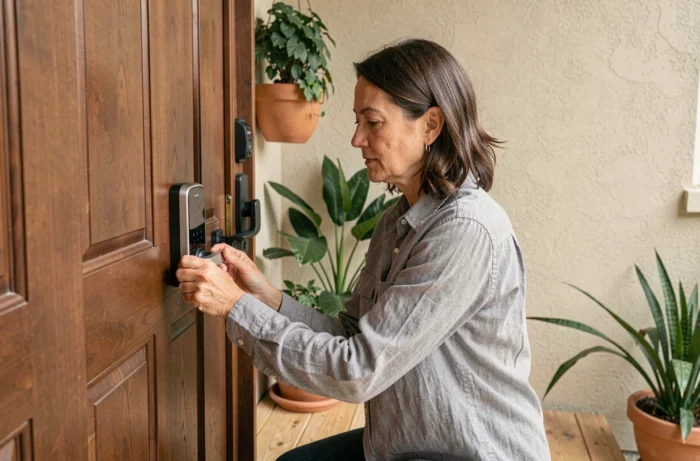
A motorized roller shutter that blocks the only bedroom window during a power outage, or a smoke detector screwed directly above an extractor vent that draws the smoke away before the alarm sounds: in trying to make a home safer, it’s easy to create a new problem without realizing it. Improving a home’s comfort and security means thinking in terms of a system, not a series of separate additions.
Home security and ventilation: the pitfalls of tackling renovations in isolation
People often start by replacing the front door or installing double-glazed windows to improve insulation and resistance to break-ins. The thermal benefits are real, but a home that is too airtight without adequate ventilation will accumulate moisture and indoor pollutants. In an older house with a single-flow mechanical ventilation system, replacing all the windows and doors without checking the fresh-air intake can cause condensation on cold walls and even encourage mold growth within a few months.
Before changing windows or doors, check the condition of the extractor vents, clean the air inlets in the window frames, and make sure the ventilation unit is running at its rated airflow. If you switch to triple glazing or install a reinforced security door without a transfer grille, consider a double-flow ventilation system or, at the very least, humidity-controlled air inlets in the new windows and doors.
For more information on home security and maintenance, the home section of Serrurerie Auberge En Ville features articles on locksmithing, door reinforcement, and interior improvements.
Smoke detectors: where not to install them
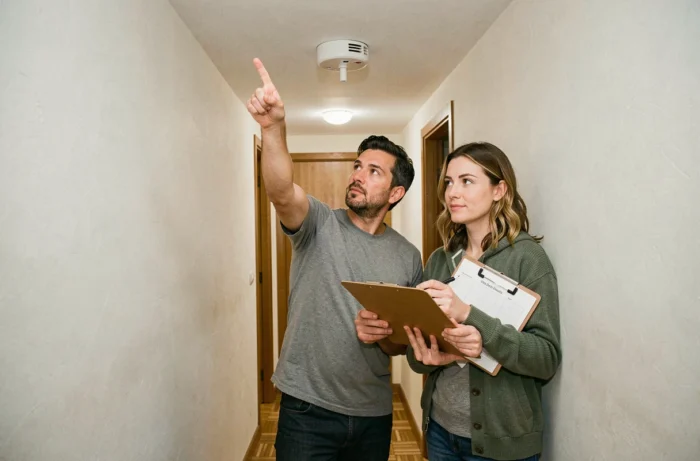
A smoke detector placed within one meter of an extractor vent or cooking appliance is likely to trigger nuisance alarms, leading most occupants to remove it or take out the battery. Install it on the ceiling, in the center of the room or hallway serving the bedrooms, away from any forced airflow. In a multi-story home, each floor should have its own detector.

Thermal comfort during hot weather: stay protected without shutting yourself in
As summers get hotter, it’s tempting to seal up the house and rely on air conditioning. This approach has two drawbacks: energy bills soar, and if the power goes out, indoor temperatures rise quickly in a closed-up home.
Exterior solar shading is the most effective way to prevent overheating. Adjustable-louver shutters, retractable awnings, and fixed sunshades on south- and west-facing walls block sunlight before it passes through the glass. Even a highly reflective interior blind lets heat into the room.
Nighttime ventilation completes the setup. Open windows on opposite sides of the house as soon as the outdoor temperature drops below the indoor temperature, creating cross-ventilation. For this to work, windows should have security restrictors or anti-intrusion grilles, so you can ventilate at night without compromising home security.
Attic and roof insulation
In a detached house, the roof is the main surface through which heat is exchanged. Inadequate insulation in an unoccupied attic can turn the upper floor into an oven as early as June. Blown-in insulation, rigid wood-fiber boards, or cellulose insulation: the material matters less than the thickness and continuity of the insulating layer. A thermal bridge around the attic hatch is enough to undermine the performance of the entire system.
Home adaptations for older adults and people with reduced mobility: safety and independence
Adapting a home for an older adult or someone with reduced mobility involves more than installing a grab bar in the shower. The goal is to reduce the risk of falls without turning the house into an obstacle course.
- Raised door thresholds are a common cause of trips. Replacing them with flush thresholds or threshold ramps reduces the risk without preventing the door from closing.
- Motion-activated lighting in hallways, staircases, and bathrooms means there’s no need to search for a switch in the dark. Low-energy LED night lights are enough to illuminate the route at night.
- Lever door handles require less strength and dexterity than round knobs, making them useful for children and people carrying heavy items, too.
- Non-slip flooring in the bathroom and kitchen reduces the risk of slipping far more effectively than a rug, which can itself become a hazard.
It’s best to plan home adaptations in advance: a hallway wide enough for a walker, a walk-in shower instead of a bathtub, and electrical outlets raised to hip height. These choices cost almost nothing during construction or renovation, but can be expensive to make later.
Locks and locking points: choose according to your home’s exposure
A front door fitted with a three-point lock offers adequate resistance for an apartment on an upper floor. For a detached house with direct street access or an unfenced garden, an A2P-certified five-point lock remains the standard recommended by insurers. A2P certification rates locks across three levels of resistance to break-ins, from the lowest (one star) to the highest (three stars).
Side doors, garage doors, and cellar doors are often the weakest links. They’re easy to overlook because they don’t face the street, even though they offer burglars a discreet way in. A cylinder lock on the cellar door and a reinforcement kit for an up-and-over garage door improve security without requiring a major investment.
Lock cylinder: when to replace it
A worn cylinder turns roughly, catches, or requires you to maneuver the key in several directions. Beyond being inconvenient, this malfunction signals that the part is weakened and easier to force. Replacing a cylinder takes just a few minutes and costs a fraction of the price of a whole new door. Choose a model with a security card to prevent unauthorized key duplication.
Improving a home’s security and comfort depends less on how many devices are installed than on how well they work together. A reinforced door in a weak wall, a poorly positioned smoke detector, or insulation installed without adequate ventilation can have the opposite of the intended effect. Each change should be assessed in terms of how it affects the rest of the home.