A car that breaks down on a Monday morning, an orange warning light coming on the highway, a flat tire in front of the school: these situations almost always have one thing in common. The vehicle did not receive the attention it deserved at the right time. Choosing the right car and then taking care of it daily are two complementary skills that can be learned.
Engine type and daily trips: the real criteria for choosing a car
Before comparing models or brands, ask yourself a simple question: what route do you take most often? The answer directly influences the choice of engine type, which is the biggest expense in your long-term budget.
A gasoline vehicle is suitable for mixed trips, city and highway, with moderate annual mileage. Fuel consumption remains reasonable on these routes, and the purchase cost is generally lower than that of a hybrid or electric model.
For those who drive a lot on the highway or take long trips, a hybrid significantly reduces fuel consumption in the city thanks to its auxiliary electric motor. However, on pure highway driving, the gain decreases: the combustion engine takes over.
You can also discover cars on Équipotto to compare different engine types based on your driving habits.
The electric vehicle makes the most sense if you have a charging station at home or work. Its maintenance costs are significantly lower than those of a combustion model, as it has no oil changes, clutches, or exhaust systems to replace.
Used car purchase: checks that ads don’t show
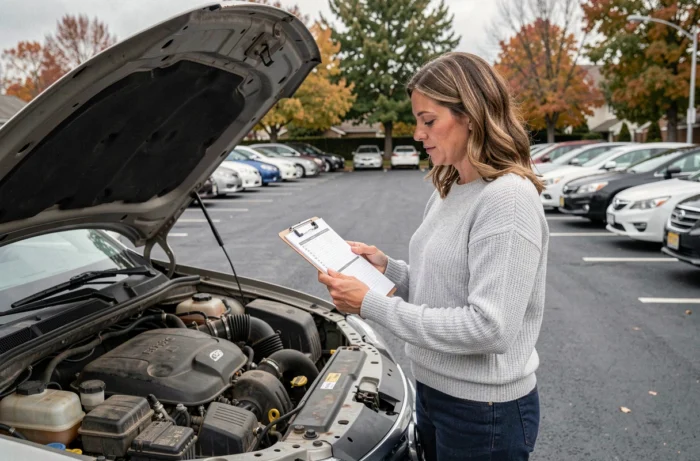
Buying a used vehicle is the majority choice in France. The entry price is softer, but the risk of unpleasant surprises is also higher. A few reflexes can help you sort effectively.
The maintenance logbook, the most reliable proof
A seller can repaint a body or clean an engine. They cannot fabricate a coherent maintenance history. Always ask for the maintenance logbook stamped by a professional. Check that the dates and mileages logically follow one another.
A gap of several years without a service indicates a potentially neglected vehicle, even if it appears clean visually.
The technical inspection, necessary but not sufficient
The technical inspection checks the vehicle’s regulatory compliance: brakes, emissions, lighting, structure. It says nothing about the condition of the engine, transmission, or air conditioning. A favorable technical inspection does not guarantee the absence of mechanical failure.
If you buy a used vehicle from a private seller, the technical inspection must be less than six months old. For light commercial vehicles, the regulatory schedule is tighter: the first inspection at four years, then renewal every two years.
Regular maintenance: actions that prevent big bills
You don’t need to be a mechanic to keep your car in good condition. A few regular checks, done by yourself or by a mechanic, are enough to prevent most costly breakdowns.
- Engine oil level: an engine running with a low oil level wears out prematurely. A glance at the dipstick every month takes thirty seconds.
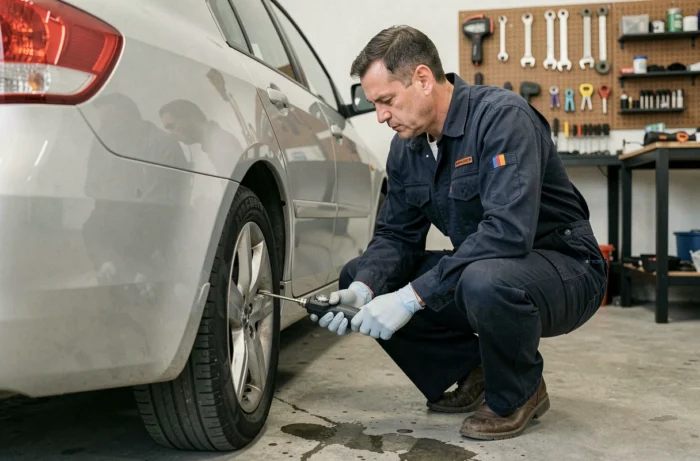
- Tire pressure: under-inflated tires increase fuel consumption and extend braking distances. Check the pressure when cold, once a month.
- Coolant level: this is checked with the engine cold, directly on the expansion tank. A level that is too low can cause engine overheating, leading to costly repairs.
- Condition of the wiper blades: worn blades leave streaks and reduce visibility in the rain. Their replacement is inexpensive and can be done without tools.
These simple actions, repeated regularly, form the basis of effective car maintenance.

Periodic service and technical inspection: do not confuse the two
Many drivers think that the technical inspection replaces the service. These are two distinct operations, with different objectives.
The service (or periodic maintenance) follows the manufacturer’s recommendations. It includes oil changes, filter replacements (oil, air, cabin), brake checks, and sometimes the timing belt change. Each manufacturer sets its own service intervals, often expressed in kilometers or months.
The technical inspection, on the other hand, is a legal obligation. It focuses on safety and emissions points, without intervening on parts. It observes, it does not repair.
A vehicle can pass the technical inspection without issue and break down the next day, simply because its last service was too long ago.
Particular case of electric vehicles
The technical inspection of an electric vehicle focuses on specific points: high-voltage electrical insulation, condition of the charging cables, regenerative braking system. The absence of a combustion engine eliminates many pollution-related checks.
In terms of regular maintenance, an electric vehicle costs significantly less to maintain than a combustion vehicle. No oil changes, no fuel filter, and brake pads that wear much less thanks to regenerative braking.
Daily car budget: often underestimated expenses
The purchase price represents only a fraction of the actual cost of a vehicle. Insurance, fuel (or electricity), maintenance, and depreciation make up the bulk of the budget.
- Depreciation mainly affects the first three years: a new vehicle loses a significant portion of its value as soon as it leaves the dealership.
- Insurance varies greatly depending on the model, engine type, and your profile. A powerful SUV costs more to insure than a small gasoline car.
- Tires represent a recurring expense often forgotten in budget forecasts, especially on models equipped with large rims.
Comparing models solely based on their catalog price is like choosing an apartment without looking at the charges. The total cost of ownership over five years is the only reliable indicator for comparing two vehicles.
Between a buying guide and rigorous maintenance tracking, the longevity of a car depends on concrete choices, not on marketing promises. The best vehicle remains the one that matches your actual trips, which you maintain regularly, and whose costs you understand before signing.