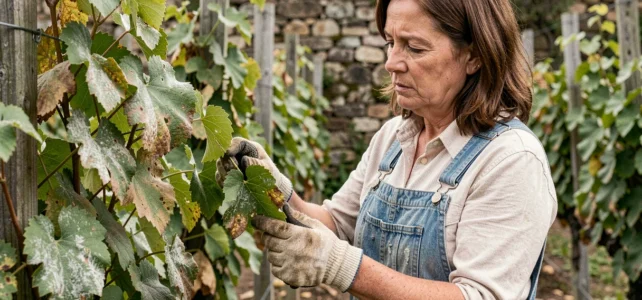
The treatment of vine diseases in the garden is not limited to spraying a product at the first symptom. Most failures come from poorly timed, repetitive interventions that promote the resistance of pathogenic fungi without addressing the underlying problem. Here, we discuss the technical levers that make the difference between a productive vine and a chronically diseased one.
Resistance to fungicides on garden vines: the trap of repetition
Applying the same active ingredient season after season for downy mildew or powdery mildew amounts to selecting resistant strains of the fungus. This mechanism, well documented in professional viticulture, also applies to gardens. Wettable sulfur against powdery mildew and Bordeaux mixture against downy mildew remain the basics, but alternating fungicide families is the only sustainable strategy.
We recommend never chaining more than two consecutive applications with the same mode of action. For powdery mildew (Erysiphe necator), sulfur can be followed by potassium bicarbonate. For downy mildew (Plasmopara viticola), copper must be supplemented with phosphonate-based preparations where regulations allow.
Knowing how to treat vine disease requires understanding this logic of alternation even before choosing a product.
Preventive treatments for downy mildew: weather calibration and application windows
Copper has no curative action. This is the most misunderstood technical point by amateur gardeners. Once oily spots are visible on the leaves and the white down is established on the underside, Bordeaux mixture only limits the spread, without healing the affected tissues.
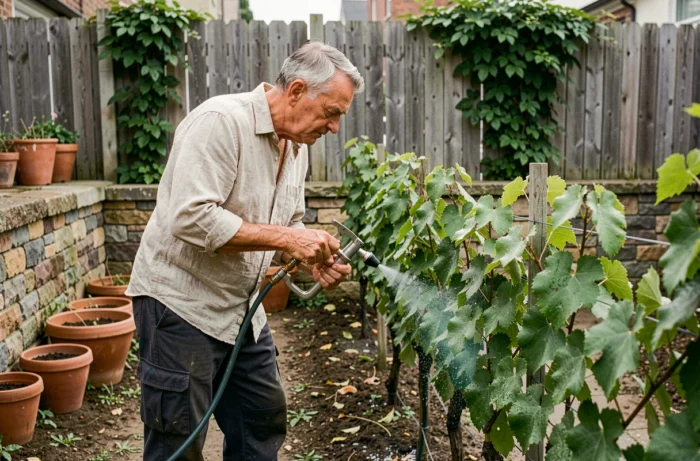
The application must occur before a forecasted rainy episode, when the temperature exceeds the threshold favorable to the fungus. In practice, this means monitoring the weather three days ahead and spraying within the twenty-four hours preceding the rain. A treatment applied after the rain, on already contaminated foliage, wastes product and unnecessarily loads the soil with copper.
The dose of metallic copper per application should remain as low as possible. Splitting the applications over several light passes protects better than a single massive application. This splitting also reduces the risk of phytotoxicity on young leaves.
Powdery mildew and gray rot: prophylaxis as the first treatment
Air circulation in the foliage takes precedence over the sprayer. A poorly managed vine, with intertwined shoots, creates a humid microclimate that simultaneously favors powdery mildew and botrytis (gray rot). The most effective approach combines several cultural practices:
- Spring bud thinning removes excess shoots and limits leaf density, which speeds up the drying of foliage after dew.
- Leaf removal around the clusters, done on the east side a few weeks after flowering, exposes the berries to light and drastically reduces botrytis pressure.
- Regular trellising keeps the shoots spread out, prevents contact between neighboring clusters, and facilitates treatment penetration during spraying.
- Thinning overly tight clusters decreases water retention areas between the berries, where the fungus settles first.
Reducing excessive vine vigor limits botrytis more than any fungicide. An excess of nitrogen in the soil produces vigorous shoots, dense foliage, and fine berry skins, creating ideal conditions for gray rot. Preferring balanced fertilization and managing the grass at the base of the vine are two often overlooked levers.
Daily humidity management
Water at the base, never on the foliage. Intervene in the morning so that the plant dries quickly. Stagnant moisture on the leaves is the main triggering factor for both downy mildew and powdery mildew. Poor soil drainage exacerbates the situation by keeping the roots in a saturated environment, also conducive to the development of wood diseases.
Biocontrol and natural preparations: real effectiveness and limits
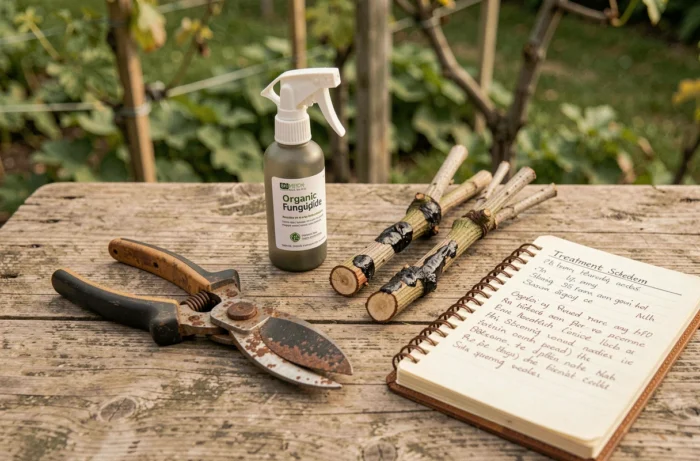
Horsetail manure, rich in silica, strengthens the cell wall of leaves and complicates the penetration of fungal spores. Fern manure has repellent properties against certain pests. These preparations do not replace a copper or sulfur treatment in the face of a declared attack, but they fit into an integrated pest management program as stimulators of natural defenses.
Baking soda (or better, potassium bicarbonate) alters the surface pH of the leaves and disrupts the germination of powdery mildew spores. Its action is strictly preventive and short-lived, which necessitates frequent renewals, especially after each rain.
However, attributing to these preparations an effectiveness comparable to approved fungicides would be misleading. We use them as a complement between two conventional treatments or during periods of low pest pressure.
Treatment schedule and common mistakes in garden vines
Most gardeners treat too late. Visible symptoms (brown spots on leaves, white fluff on clusters, split berries) indicate contamination that has already been established for several days. The treatment schedule must anticipate sensitive phenological stages:
- Bud break at 2-3 spread leaves: first copper treatment if spring is humid.
- Pre-flowering: sulfur application against powdery mildew, when the inflorescences are very receptive.
- Fruit set to cluster closure: critical window for botrytis, combine leaf removal and treatment if necessary.
Another common mistake: using a poorly adjusted sprayer. A too-coarse spray leaves uncovered areas on the underside of the leaves, where downy mildew sporulates. Adjusting the nozzle to achieve a fine mist and treating both sides of the foliage radically changes the effectiveness of the application.
A well-timed and well-applied treatment is better than three approximate passes. Reducing the number of interventions relies on the precision of the action, not on increasing doses. It is this integrated approach, combining prophylaxis, weather monitoring, and reasoned product choice, that sustainably protects the garden vine without exhausting available solutions.