A ballpoint pen that smudges turns a note page into a test of patience. Choosing the right model depends on measurable parameters: ink viscosity, ball diameter, drying time. Comparing these criteria helps identify combinations that produce a clean line without smudging, regardless of the paper used.
Drying time and viscosity: the two factors that separate a clean pen from a smudging one
The viscosity of the ink determines the fluidity of the line, as well as the speed at which it dries. Oil-based inks, characteristic of the classic ballpoint pen, offer high viscosity and near-instant drying. Gel inks, which are more fluid, deposit more material on the paper and require several seconds before setting.
Practical tests shared by left-handed communities show that a hybrid ink dries in about one second on standard paper. A classic gel ink like that of the Pilot G2 may take three to four seconds, a gap sufficient to cause smudges under the hand.
| Ink Type | Viscosity | Indicative Drying Time | Smudge Risk |
|---|---|---|---|
| Classic Ball (oil) | High | Less than one second | Low |
| Hybrid (e.g., Uni-ball Jetstream) | Medium-high | About one second | Low |
| Gel (e.g., Pilot G2) | Medium-low | Three to four seconds | Moderate to high |
| Roller (liquid ink) | Low | Variable, often more than three seconds | High |
This table highlights a often overlooked point: the type of ink matters more than the brand of the pen. A high-end roller will smudge more than an entry-level ballpoint if the ink is too fluid for the paper used.
To choose a ballpoint pen wisely, one must start by identifying the type of ink before looking at the design or price.
Ball diameter and line thickness: an underestimated parameter against smudging
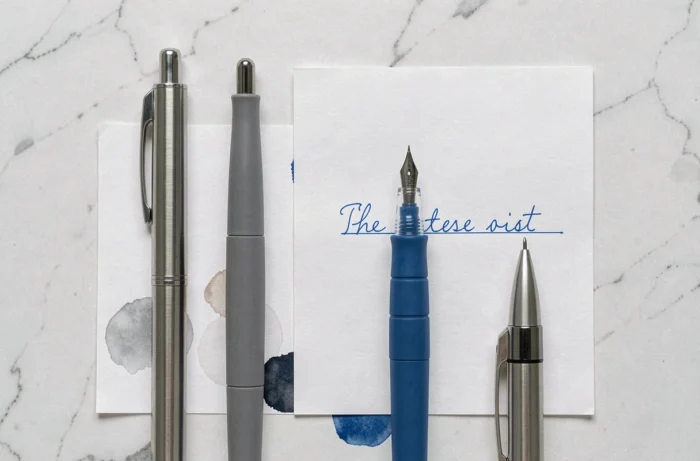
The diameter of the ballpoint directly influences the amount of ink deposited with each stroke. A wide tip releases more ink, increasing the risk of smudging on thin or porous paper.
- Fine tips (0.5 mm or less) produce a thin line that dries faster and rarely bleeds through the paper. They are suitable for tight writing and lightweight papers.
- Medium tips (0.7 mm) represent a common compromise between writing comfort and line cleanliness.
- Wide tips (1.0 mm and above) produce a thick line, pleasant on thick paper but problematic on standard office or notebook paper.
Reducing the ball diameter mechanically decreases the volume of ink and thus the effective drying time. For someone who writes quickly or stacks sheets immediately after writing, switching from a 1.0 mm tip to a 0.5 mm tip can be enough to eliminate smudges without changing brands.
The particular case of left-handers
Left-handers push the pen instead of pulling it, and their hand consistently passes over what they have just written. Feedback has converged over the years: the priority for a left-hander is the actual drying time, not the type of pen. A hybrid ink like Jetstream paired with a fine tip eliminates most smudging issues.
Hybrid ink and next-generation ballpoint pens: what classic guides don’t explain
Low-viscosity hybrid inks represent a unique category. They combine the writing fluidity of gel with the quick drying of oil-based ink. The Uni-ball Jetstream is the most documented model in this category.
This type of ink works thanks to a formulation that reduces friction between the ball and the paper while limiting the lateral spread of the ink. The result: a line that glides effortlessly but does not migrate into the paper fibers.
However, these hybrid pens generally cost more than classic ballpoints. The refills are also more specific, limiting compatibility between brands. For intensive daily use (note-taking in class, repeated signatures, forms), the investment in a hybrid is justified by the reduction of corrections and rewrites.

Paper quality and interaction with ballpoint ink: the forgotten factor
A ballpoint pen never smudges alone. The paper plays a crucial role in the behavior of the ink after deposition. Low-weight, porous, or uncoated paper absorbs ink unevenly and promotes “feathering,” those small branches that make the line blurry.
- A paper with a sufficiently dense weight limits excessive absorption and prevents the ink from bleeding through the sheet.
- Coated or satin papers retain ink on the surface, enhancing line sharpness but potentially prolonging drying time.
- Recycled papers, often more porous, exacerbate smudging with gel or roller inks but remain compatible with classic high-viscosity ballpoints.
Pairing a hybrid ink ballpoint pen with paper of the correct weight produces the best results in terms of writing cleanliness. Testing your pen on the paper you actually use, rather than on a sample in the store, remains the most reliable method to avoid unpleasant surprises.
Choosing a ballpoint pen that does not smudge boils down to three measurable variables: ink viscosity, tip diameter, paper weight. Low-viscosity hybrid inks, combined with a fine tip, cover the vast majority of daily writing situations without smudging.