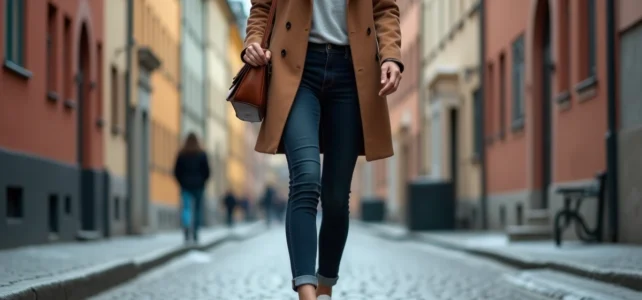
Stockholm is best explored on foot: Gamla Stan and its cobbled streets, the quays of Södermalm, the paths of Djurgården. The choice of shoes for visiting Stockholm affects both walking comfort and the ability to remain stylish on surfaces that vary from one neighborhood to another. Irregular cobblestones, wet slabs, dirt paths in the parks: each type of ground imposes specific constraints on the sole, upper, and cushioning.
Surfaces of Stockholm: comparison of constraints by neighborhood
Travel guides treat the city as a homogeneous block. However, the surfaces vary radically depending on the areas, and each surface demands different requirements from the shoe.
| Neighborhood / area | Dominant surface | Main constraint | Shoe priority |
|---|---|---|---|
| Gamla Stan | Round cobblestones, wide joints | Lateral instability, risk of twisting | Stiff sole, good ankle support |
| Södermalm | Asphalt, marked slopes | Slippery descents in wet weather | Grip, heel cushioning |
| Djurgården | Dirt paths, gravel | Small stones, mud after rain | Textured sole, waterproofing |
| Norrmalm / city center | Smooth slabs, concrete | Foot fatigue on hard ground | Soft cushioning, supported arch |
| Quays and bridges | Metal, treated wood | Slippery surface due to condensation | Soft rubber, non-slip profile |
This table shows that no single type of shoe covers all terrains. The most reliable strategy is to bring two complementary pairs rather than a mediocre all-purpose pair for each surface.
To refine the choice according to the season and dress style, the guide on shoes to wear in Stockholm according to Mademoiselle C details several combinations suitable for the Scandinavian climate.
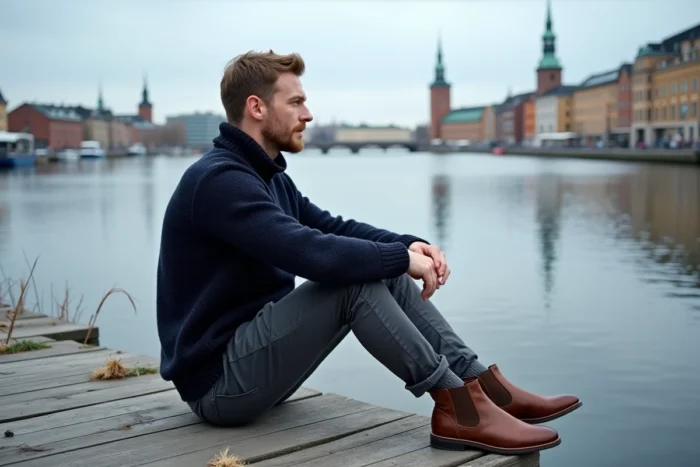
Soling and grip on Scandinavian cobblestones: what makes the difference
The cobblestones of Gamla Stan are not like Parisian cobblestones. Their profile is rounder, the joints between the stones are wider, and the frequent moisture makes them slippery for a good part of the year.
A soft rubber sole with a multidirectional profile offers the best grip on this type of surface. Flat and smooth soles, typical of fashion sneakers, lose all grip as soon as the stone is wet.
Technical criteria to check before purchase
- Rubber hardness: a soft rubber (like natural rubber) grips better on wet stone than a rigid EVA sole or hard plastic
- Tread depth: a relief of a few millimeters is sufficient for the city, but it must be multidirectional to handle the slopes of Södermalm
- Flexibility of the forefoot: a sole that is too rigid tires the toes over long distances, while a sole that is too soft does not protect against the irregularities of the cobblestones
- Heel width: a narrow heel (stiletto or spool heel) gets stuck in the joints of the cobblestones, while a block heel remains stable
Leather sneakers with a textured sole represent the best compromise between grip, comfort, and a polished appearance. Leather provides a structure that mesh does not offer, and the textured sole manages transitions between asphalt and cobblestones effortlessly.
Stockholm’s climate and its impact on shoe choice
Recent climate data shows a trend of rising average temperatures in winter in Stockholm, with more frequent thaw episodes. The direct consequence: the ground alternates between snow, rain, and ice unpredictably during the cold season.
In summer, rain remains possible several days a week. A non-waterproof shoe ends up soaked before noon, even in July.
Waterproofing versus breathability
The classic dilemma of the urban traveler arises with particular intensity in Stockholm. A waterproof membrane protects from moisture but makes the foot sweat. In contrast, full-grain leather treated with a water-repellent spray allows the foot to breathe while resisting a moderate downpour.
For a summer stay, treated water-repellent leather is sufficient in most cases. For a trip between October and March, a waterproof membrane becomes necessary, especially if the itinerary includes Djurgården or Skansen, where dirt paths turn into mud.
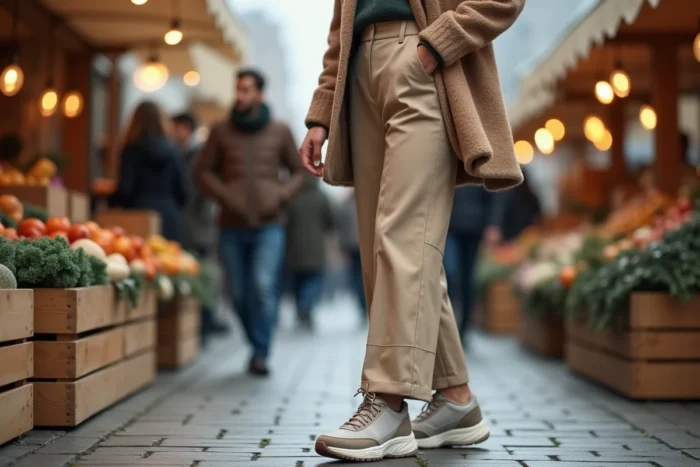
Two pairs for Stockholm: the combination that works
Rather than searching for the perfect shoe (which does not exist), bringing two targeted pairs covers all situations of a Scandinavian urban stay.
Main pair: leather sneakers with a textured sole. They are suitable for long days, museums, subway rides, and walks on cobblestones. The leather gives them a sufficiently polished look for an evening restaurant.
Secondary pair: waterproof ankle boots with a block heel. They take over when the weather deteriorates or when the itinerary includes unpaved paths. The block heel remains stable on the cobblestones and adds a touch of style that hiking boots do not allow.
What’s better left in the suitcase
- Flip-flops and open sandals: even in summer, evening temperatures drop quickly, and cobblestones can damage exposed toes
- Thin heels: incompatible with the joints of the cobblestones in Gamla Stan, real risk of ankle twisting
- White canvas sneakers: they absorb moisture like a sponge and get dirty within the first hour on the paths of Djurgården
The combination of leather sneakers and waterproof ankle boots is lightweight in luggage, covers the climatic variations of Stockholm, and allows for a transition from a museum visit to a seaside stroll without changing the dress code. The determining criterion remains the grip of the sole on wet stone, a parameter that most travelers neglect in favor of aesthetics alone.