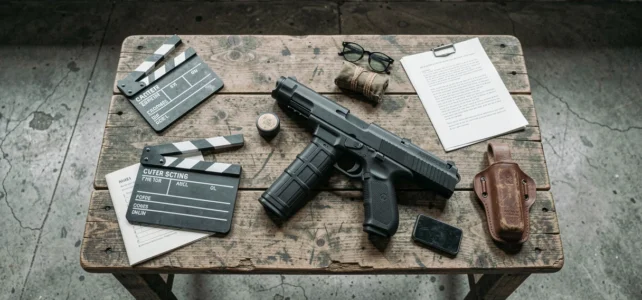
In the John Wick saga, every weapon carried by Keanu Reeves’ character serves a specific narrative function. The choice of a gun or a rifle on screen results from a collaborative effort between director Chad Stahelski, stunt coordinators, and specialized weapon handlers. This work goes beyond mere aesthetics: it shapes the rhythm of the fights, the actor’s gestures, and the visual coherence from one film to another.
Why action cinema chooses one weapon over another
A movie gun is not selected like a military-issued weapon. The criteria differ radically. Maneuverability during fight choreography takes precedence over ballistic power. A model that is too heavy or cumbersome slows down the transitions between shooting and hand-to-hand combat, two registers that the John Wick saga seamlessly blends.
The visual profile also matters. A weapon must be identifiable in a fraction of a second on screen, even in wide or dark shots. This is why the weapons used by John Wick often feature angular lines, prominent compensators, or contrasting finishes that stand out against the background.
The weapon becomes a marker of the character’s identity, just like a costume or a car. A regular viewer of the franchise recognizes John Wick’s gun even before seeing his face. This principle has guided production decisions since the first film.
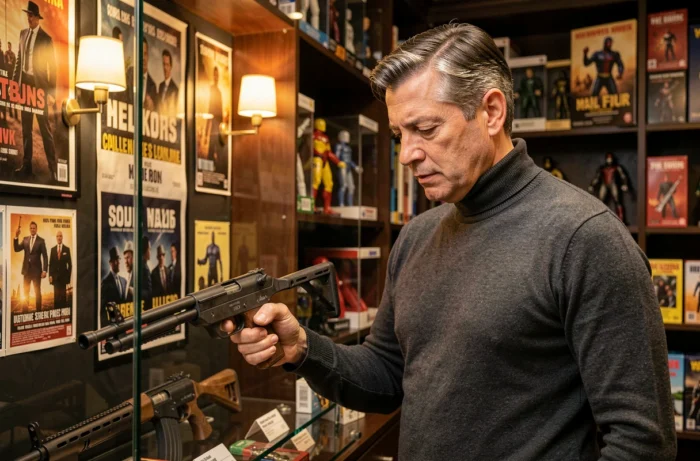
Taran Tactical Innovations and the evolving arsenal of the saga
The first film relies on relatively standard models. The Heckler & Koch P30L, a compact striker-fired pistol, accompanies John Wick in most of his initial confrontations. Its ergonomics allow for quick transitions between shooting and judo grips that Chad Stahelski, a former stuntman, incorporates into his direction.
From the second chapter onward, the arsenal shifts to weapons prepared by Taran Tactical Innovations (TTI). This California-based company, specializing in customizing competition firearms, provides models suited to the constraints of filming. The TTI-modified Glock 34 and the STI 2011 Combat Master become the signature pistols of the saga’s sequel.
What TTI preparation concretely changes
The modifications made by Taran Tactical are not cosmetic. They affect the trigger, recoil compensator, and flared magazine well. On set, these adjustments allow Keanu Reeves to execute rapid reloads that have become a visual signature of the franchise.
The tactical reload filmed in a single shot distinguishes John Wick from most contemporary action films. Without a weapon designed for a smooth magazine change, these sequences would be impossible to shoot at the desired pace.
- The compensator reduces the vertical movement of the barrel, allowing for successive shots to be filmed without the weapon leaving the frame.
- The flared magazine well speeds up the insertion of the new magazine, making the motion natural even at real speed.
- The lightened trigger decreases the force needed to pull it, which limits the actor’s fatigue during intensive shooting days.
Visual continuity between John Wick films and its effect on the market
Each new chapter of the saga introduces new weapons while retaining recurring models. The Benelli M4, a semi-automatic shotgun, appears in several films with different TTI configurations. This logic of continuity creates a coherent universe where the character refines his equipment without narrative breaks.
Bladed weapons gain visibility as the chapters progress. OTF (Out The Front) automatic knives, particularly Microtech models, appear in close combat scenes. This rise in the prominence of blades reflects the dramatic escalation of the saga: the closer the enemies get, the shorter the weapons become.
Replicas and reproductions: a market stimulated by cinema
The impact of the franchise extends beyond the realm of cinema. The models seen on screen generate demand in the airsoft replica and sporting firearms market. The Glock 34 in TTI “Combat Master” version has become a sought-after product among sport shooters who wish to replicate the configuration seen in the films.
Taran Tactical also offers packages directly inspired by the saga, blurring the line between movie prop and commercial product. The film becomes a life-sized catalog for the manufacturer, and the manufacturer, in return, provides technical credibility to the film. This symbiotic relationship between the film industry and weapon handlers constitutes a business model that few other action franchises have managed to replicate.
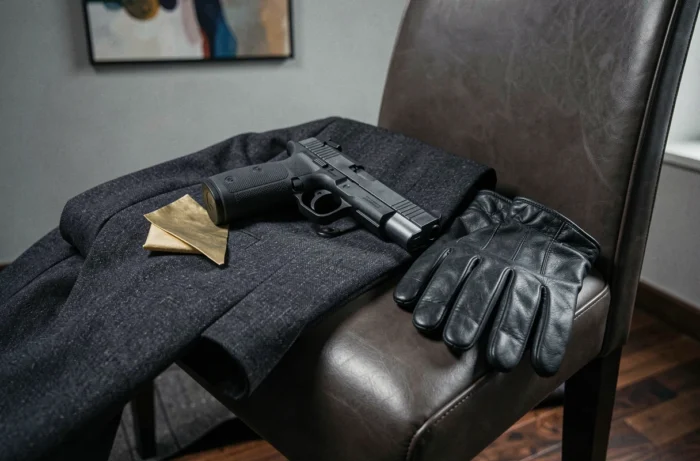
What the John Wick saga has changed in the representation of weapons in cinema
Before the franchise led by Keanu Reeves, most action films treated weapons as interchangeable props. A character could switch from one gun to another without the viewer paying attention. The John Wick saga reversed this logic by making each weapon an identifiable narrative element.
Chad Stahelski imposes a shooting protocol where the actor handles the weapon according to real dynamic shooting techniques. Reloading movements, shoulder transitions on long guns, and position changes are choreographed with the same rigor as a martial arts fight scene.
Gun fu, a fusion of shooting and martial arts, relies on the actor’s gestural credibility. Keanu Reeves trained for months with competitive shooters to acquire the necessary reflexes. This physical preparation has redefined audience expectations regarding action scenes in contemporary cinema.
The legacy of the saga continues with derivative productions like Ballerina, which adopts the visual codes and weapon choices established by the four main films. The character of John Wick has transitioned from a mere action hero to a technical reference, both for filmmakers and for competition weapon enthusiasts.